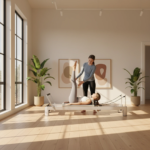
the difference between pilates mat and reformer
March 2, 2026What is Pilates? A Comprehensive Guide to its Principles
March 17, 2026
Pilates Reformer: Power in Flexibility
In the world of Pilates, two paths lead to the same destination — balance, strength, and mindful movement — yet they offer distinctly different journeys. Mat Pilates and Reformer Pilates share the same philosophy and foundational principles developed by Joseph Pilates, but their methods and sensations vary greatly. While one relies solely on the body’s own resistance and gravity, the other introduces a sophisticated apparatus that challenges both the mind and muscles in dynamic ways. Understanding their differences can help practitioners choose — or blend — the right approach for their body, goals, and lifestyle.
The Science Behind the Reformer
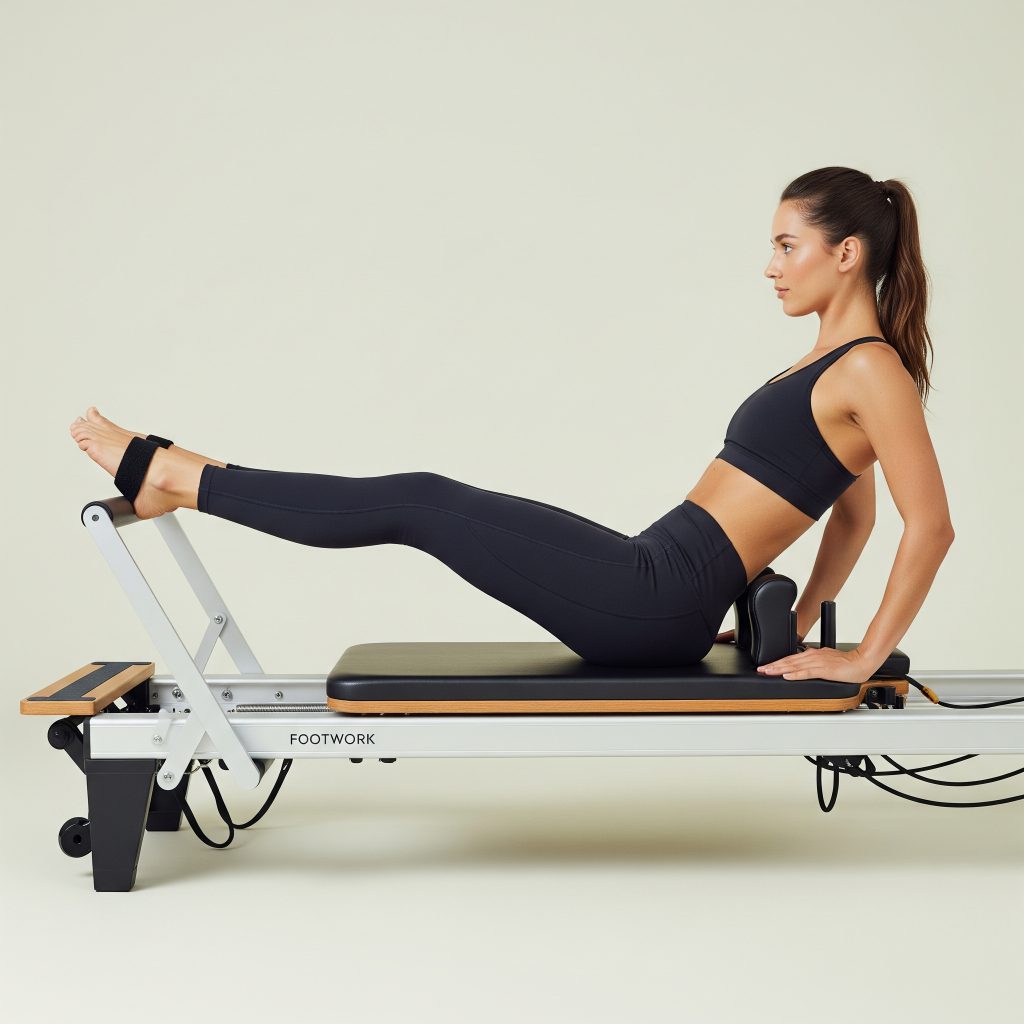
At the heart of the Pilates Reformer lies the interplay between resistance and control. The adjustable springs generate resistance that matches the user’s strength and range of motion, ensuring that every movement is deliberate, centered, and mindful. Unlike traditional gym exercises, which often rely on isolated muscle engagement or repetitive strain, the Reformer promotes dynamic, full‑body integration.
Each session becomes a mindful dialogue between movement and stability — the muscles lengthen as they strengthen, the joints lubricate through controlled mobility, and the nervous system refines its coordination. This approach not only enhances flexibility but also re‑educates the body toward balanced movement patterns and optimal alignment.
Power Through Flexibility
Flexibility, in the Pilates philosophy, is not simply about loosened muscles or hypermobility. It’s about functional elasticity: the ability of the body to move freely while maintaining integrity and strength. On the Reformer, every stretch is supported by resistance — meaning the body learns to be flexible under tension. This is the secret behind the concept of “power in flexibility.”
When the body becomes both supple and stable, it gains a deeper strength — not brute force, but controlled, intelligent power. The Reformer strengthens the deep stabilizing muscles of the core, spine, and pelvis, allowing practitioners to generate movement from a place of centered energy. Athletes, dancers, and even those recovering from injury benefit from this dual quality, achieving greater efficiency, balance, and resilience through consistent practice.
Mind–Body Connection
Beyond the physical benefits, the Reformer embodies the essence of the mind–body connection. Each session demands precision, awareness, and breath control — reminding practitioners that true power stems from conscious movement. The deliberate pacing of Reformer exercises encourages presence: muscles respond to thought, alignment is refined with each breath, and the mind learns to inhabit the body fully.
This holistic focus doesn’t just sculpt a lean physique; it also cultivates mental clarity, stress relief, and a renewed relationship with one’s own physicality. In a world that constantly demands speed and productivity, the Reformer offers a counterbalance — a disciplined, meditative practice that unites strength and serenity.
Conclusion
The Pilates Reformer stands as a testament to the harmony between strength and grace. Its philosophy of power in flexibility challenges conventional ideas of fitness by proving that true physical capability emerges from balance, control, and mindful adaptability. Whether you’re a seasoned athlete, a rehabilitation patient, or simply someone seeking to move with more freedom and purpose, the Reformer offers a transformative experience — one where every movement refines both body and mind.
Through consistent practice, the Reformer does more than tone muscles; it rewires how we move, breathe, and inhabit our physical selves — revealing that authentic power lies not in rigidity, but in the elegant strength of flexibility.