pilates reformer , power in flexibility
March 3, 2026Guide to a Healthy Lifestyle and Sports Nutrition
March 23, 2026
Pilates Benefits, and Techniques
In today’s high-stress world, the search for methods that harmonize both body and mind has become increasingly vital. Pilates, founded by Joseph Pilates in the early 20th century, offers a comprehensive answer to this need. This exercise system, emphasizing the mind-body connection, not only aids physical strengthening but also promotes bodily awareness, enhances quality of life, and fosters inner balance. More than just a simple workout, Pilates is a movement philosophy that helps individuals unlock their full physical potential, achieving lasting health through precise, controlled, and coordinated movements.
Part One: The Six Key Principles of Pilates
The success and effectiveness of Pilates exercises are built upon adherence to six fundamental principles, each playing a vital role in a deeper understanding of movement and the body:
Concentration: Pilates emphasizes full awareness of every movement, breath, and muscle involved. This focus helps you derive maximum benefit from your exercises and avoid common mistakes.
Control: Every movement in Pilates is executed with complete control. The aim is to move muscles consciously and precisely, not merely to complete repetitions. This principle aids in strengthening weak muscles and controlling strong ones.
Center: Pilates focuses on strengthening the body’s “powerhouse,” encompassing the abdominal, back, and pelvic muscles. This center is the foundation for stability and control of all body movements.
Flow: Movements in Pilates are performed fluidly and continuously, with each movement transitioning smoothly into the next. This flow enhances exercise efficiency and helps create a flexible and coordinated body.
Precision: The quality of movement takes precedence over quantity. Each exercise must be performed with complete accuracy and correctness to achieve the intended benefits.
Breathing: Breathing plays a pivotal role in Pilates. Deep breathing coordinated with movements helps deliver better oxygen to muscles, increase concentration, and clear the mind.
Part Two: Benefits of Pilates
Pilates, by focusing on mind-body coordination, brings extensive benefits to both physical and mental health. These advantages directly impact individuals’ quality of life.
| Benefit Category | Description and Effects |
|---|
| Core Strength Enhancement | Pilates specifically targets the deep abdominal, back, and pelvic muscles. These exercises create a strong, stable center, which is crucial for supporting the spine, improving balance, and preventing back pain. |
| Improved Flexibility and Range of Motion | Through controlled and precise stretching movements, Pilates gradually enhances the flexibility of joints and muscles. This leads to a greater range of motion, reduced muscle stiffness, and increased agility in daily activities. |
| Increased Movement Precision and Control | The precise and controlled nature of Pilates significantly heightens bodily awareness and the understanding of how to execute movements. This precision ensures that muscles are activated correctly, unwanted movements are avoided, and neuromuscular coordination is improved. |
| Better Posture Improvement | By strengthening the core and back muscles, as well as increasing awareness of body alignment, Pilates helps correct postural abnormalities caused by prolonged sitting or poor habits. This results in straighter standing and sitting, reduced pressure on the spine, and a more poised appearance.. |
Part Three: Types of Pilates and Basic Techniques
Pilates is performed in two main ways:
Mat Pilates: This method utilizes body weight and gravity to perform exercises on the floor. Many classic Pilates movements like “The Hundred,” “Roll Up,” “Leg Circles,” and “Swan Dive” fall into this category. Mat Pilates requires no special equipment and can be practiced anywhere.
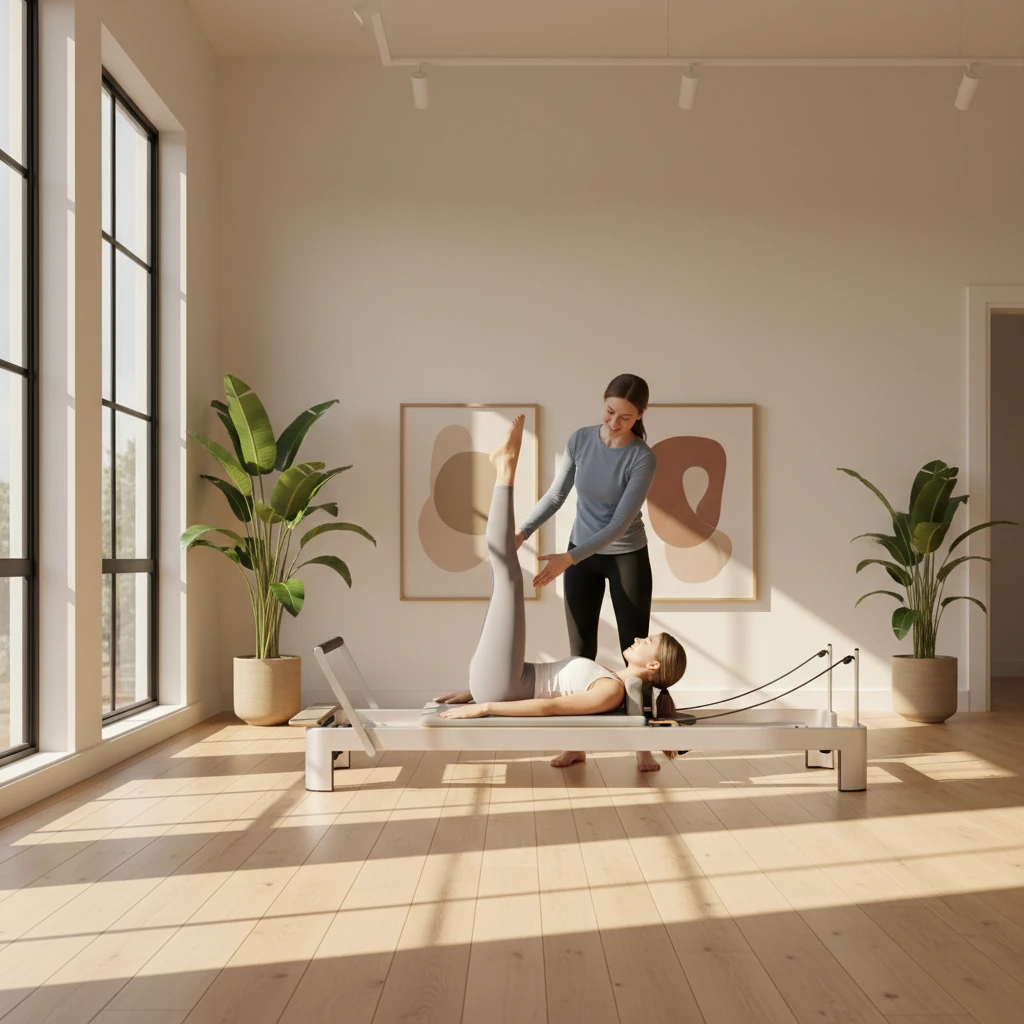
Equipment Pilates: This method employs specialized apparatus such as the “Reformer,” “Cadillac,” “Chair,” and “Barrel.” These apparatus, by providing resistance or assistance, enable a wider range of exercises and introduce different challenges to the body.
Introduction to a Basic Technique: The Hundred
This exercise is one of the most recognized and fundamental Pilates movements, designed to warm up the body, boost circulation, and strengthen the core muscles. In this exercise, the individual lies on their back, slightly lifting the head and shoulders off the ground, keeping the arms extended by their sides, parallel to the floor. Then, with small, strong up-and-down movements of the wrists, they perform short, coordinated breaths. The goal is to complete one hundred counts (five inhales and five exhales) while maintaining core engagement and a stable body position.
Part Four: Who Can Practice Pilates?
One of Pilates’ outstanding features is its adaptability to the needs of diverse individuals. This discipline is suitable for a wide range of people, regardless of age, fitness level, or physical condition:
- Athletes: Pilates helps athletes improve their core strength, flexibility, control, and stability, which is effective in enhancing athletic performance and preventing injuries.
- Individuals with Postural Issues or Chronic Pain: Particularly for back pain sufferers, Pilates can play a significant role in pain reduction and improving quality of life by strengthening the muscles that support the spine and correcting posture.
- Pregnant and Postpartum Women: Modified Pilates exercises can contribute to maintaining physical health during pregnancy, facilitating labor, and aiding the body’s quicker recovery postpartum.
- Seniors: With its low-impact movements and focus on balance and control, Pilates helps seniors maintain mobility, muscle strength, and prevent falls.
- Beginners and Fitness Enthusiasts: Pilates is an excellent starting point for those seeking to improve overall health, increase body awareness, and achieve a stronger, more balanced physique.
Pilates, by integrating fundamental principles of movement, breath, and mental awareness, provides a powerful framework for achieving holistic health. This exercise system, born from Joseph Pilates’ experiences, is recognized today as one of the most effective methods for strengthening the body, increasing flexibility, improving posture, and attaining mental tranquility. Whether you are an athlete, someone seeking relief from chronic pain, or simply looking to enhance your quality of life, Pilates can be a unique path to discovering your body’s and mind’s hidden potential. By adhering to its principles and executing movements with precision, you can witness a profound transformation in your physical and mental well-being.